
Why corporate life can be riskier than entrepreneurship

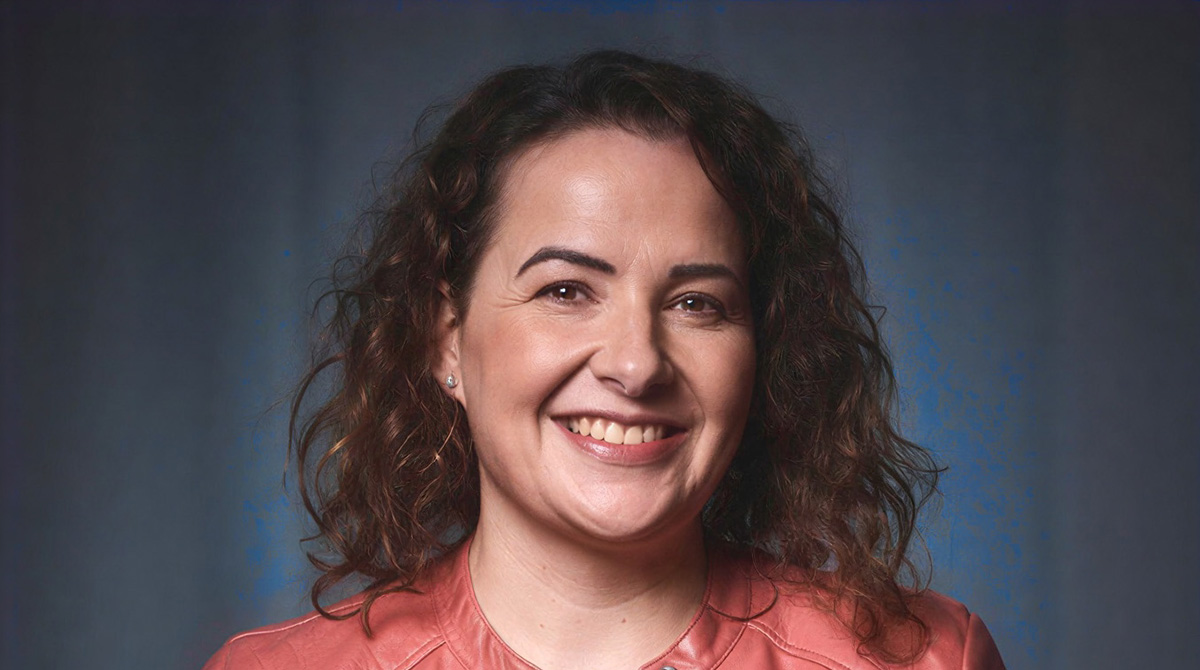
Meet Alison Hardacre, the Co-Founder and Co-CEO of Halaxy, a global health tech company that’s making healthcare more efficient and accessible.
Entrepreneurship is often presented as the riskier choice.
But for Halaxy Co-Founder and Co-CEO Alison Hardacre, staying in the corporate world was riskier than running her own business.
“So many people want to found their own business but stay in the corporate world because they perceive that as the safe route,” Hardacre said.
“They might say ‘I’ve got a mortgage, kids, et cetera’, which is very understandable, but the job can go in the corporate world in a heartbeat as well.”
The politics of the corporate world influencing whether a person succeeds or fails, also went against Hardacre’s core value of fairness.
“As a founder whether I succeed or fail is based on the outcomes I achieve, rather than the political sands of time” Hardacre said. She compares it to the legend of William Tell shooting an apple off his son’s head with a bow and arrow.
“In the corporate world, you're the son; you could be the best person in the company, but your life is not in your control,” she said.
“As a founder, yes there’s pressure, but if you’ve practiced and you know how to shoot a bow and arrow, you can do it. And I prefer to be the father than the son.”
Leaving the corporate world
All of this is ironic for Hardacre who never intended to be an entrepreneur.
Hardacre studied Arts/ Law and did Asian languages as part of her degree (she speaks Indonesian, Thai, Malay, Cantonese and Lao).
“I did my law degree, and I wasn’t quite sure what I wanted to do,” she said.
After working in consulting and completing her MBA at Melbourne Business School, Hardacre went on to run corporate planning and strategy at Medibank Private before heading up strategy and transformation in a division of ANZ, then overseeing sales, marketing, product, and major technology and operations projects in the bank.
“Early on at ANZ, I realised I wanted to run my own business, and it took a while for the idea to come. I had thought how you decide between options was by reading the AFR, but it’s actually about passion,” Hardacre said.
“I wanted to build a business that has a measurable impact on the world. I had been on government and not-for-profit boards in healthcare, welfare and disability, so had an understanding of healthcare that I could bring to building my own business.”
Halaxy was born
Hardacre noticed healthcare was one of the last industries to digitise.
“It’s also very fragmented, and I wanted to solve that complexity for practitioners and patients,” she said. She had already founded one business, Specialist Link, before co-founding Halaxy in 2013.
The global healthcare platform is designed to make healthcare more efficient, effective, and accessible.
“The biggest issue we are addressing is that doctors don’t need more patients but patients need more doctors. We save doctors time so they can treat more patients, which solves unmet patient need," Hardacre said.
“We run practices all around the world for anybody from GPs to orthopedic surgeons and psychologists. All practitioners need to do is make a booking, and Halaxy handles all their appointments, invoices, and patient records automatically for them, so they can focus on treating patients."
Today Halaxy operates in 100 countries across 100 professions and is used by more than 40,000 medical and health practitioners.
Halaxy also allows patients to book with practitioners, manage their own healthcare, and see practitioners online or face-to-face.
Scaling a global business
Halaxy was always intended to be an international business.
“When we decided to build a global business, we had to work out what the difference was between different health systems around the world, and the key was clinical billing and how healthcare is paid for,” she said.
They made sure they had technical capability from the start, so the product was global from day one.
“It’s not particularly sexy to map out clinical billing and item codes around the world, but that’s what we had to do and then we built the software that could handle that.”
Hardacre said they focused on building marketing capability in Australia before rolling out to different markets.
“It was very much a series of prioritisations to make sure the product was to the highest standard required before we entered into a particular market.”
Lessons as a founder
In the beginning, they had no money and Hardacre didn’t earn a salary for five years.
Most people would be forgiven to think of giving up.
“I think you’re not honest with yourself if you don’t think about that. That is a lot of entrepreneurs’ journeys,” Hardacre says.
But they maintained a relentless focus and belief in the outcome they set out to achieve.
“I think the reason we succeeded was because we kept going beyond what any rational person would do.”
Having no money helped them develop a “relentlessly resourceful” mindset.
“That comes from being a founder, okay we don’t have money but how are we going to achieve this outcome and go and get it done.”
Hardacre says a focus on action and prioritisation were two critical factors to success as an entrepreneur.
“The key thing is action continually and if you’re unsure what action to take, that action is always ‘what should I do right now to get the most users for my product?’
Winning in a rapidly changing environment
While today Halaxy has a lot more resources and opportunities, they still adopt this relentlessly resourceful mindset.
“It’s about making sure we pick the right priority and achieve it efficiently in order to have the biggest impact.”
Hardacre said over the past decade the traditional view of business strategy had evolved.
“Strategy is what is your position in the market vis-à-vis competitors and how are you going to win?”
“Now there are more sideswipes that can happen because things are moving faster so positioning yourself to act quickly no matter the competitive environment is absolutely critical in this day and age.”
She said being able to hold your nerve as a leader was also imperative, particularly when the business environment was changing rapidly.
“When I look back at the start of the year, where AI was going was a bit opaque,” she said.
“Now the path forward is clearer, it’s about making sure we enact that path. It’s about action, prioritization, delivery and execution.”
They have just released their eighth AI product.
Looking back on Hardacre’s own journey, she has always been a serial improver.
“I always wanted to improve things, be that in the community sector, or in my roles in the corporate world, whereas that’s probably not what my job was,” she said.
“But when you’re running your own business, you can really achieve that. It’s incredibly tough at times but it’s allowed me to be very much fully myself.”
Alison Hardacre is the Co-Founder and Co-CEO of global healthcare company Halaxy and an alumni of Melbourne Business School. Hear Alison speak at this year’s Women in Leadership Dinner on the 26th November.

26
NovWomen in Leadership Dinner 2026

Women in Leadership Program
Leadership Development
Women in Leadership Program
Confidently enter the next phase of your professional journey with invaluable guidance, skills, and connections to thrive in leadership.

Degree Programs
Whatever your career stage or aspirations, we have a program to suit your needs and develop your capabilities.

